



Butternut, Hokkaido or decorative Halloween pumpkins
The choice is yours! Pumpkin is incredibly versatile: deliciously prepared as soup, baked into bread or freshly carved for Halloween. From late August to early November, we harvest our field-fresh pumpkins in the varieties Hokkaido, Butternut and Halloween. As soon as it gets a little cooler, many of us fall under the spell of pumpkins. With their intensely nutty flavour and slightly sweet, juicy flesh, pumpkins are perfect for cooking autumn dishes.
Unlike asparagus, berries and cherries, we sell our pumpkins in our autumn-decorated Little Pumpkin World in Deinste, at our strawberry-shaped sales stand in Deinste, and to food retailers and restaurants.

Pumpkins
Our varieties and their characteristics

Edible pumpkin
– sweet and nutty, buttery and wonderfully aromatic in flavour
– is a type of musk squash
– the variety originally comes from America
– soft, creamy, buttery flesh that is very easy to cut
– can be stored for one to two months in a cool, dark place
– great in the kitchen for: soup, purée
– lots of healthy minerals such as potassium, calcium and magnesium

Edible pumpkin
– mild, sweet taste with a slightly nutty note
– very popular, well-known variety with a firm texture
– the pumpkin originally comes from Japan
– tastes great with ginger and/or chilli
– can be stored for up to six months in a cool, dark place
– delicious as a roasted vegetable, in bakes and as soup
– lots of healthy minerals such as carotene, vitamin C, B6 and B2

Decorative pumpkins, small & large
– a feast for the eyes
– not edible (contain toxic bitter compounds)
– dry out faster, great as decoration
– can be stored for two to three months in a cool, dark place (uncut)

Quality
Our pumpkin quality promise to you
Control is good, trust is better. We think so – and we take care of both. We trust in our regional way of working, which is at the heart of who we are and of our fruit and vegetables. And we check every pumpkin, every fruit and every berry individually for you at harvest.
pumpkin
Contact Person
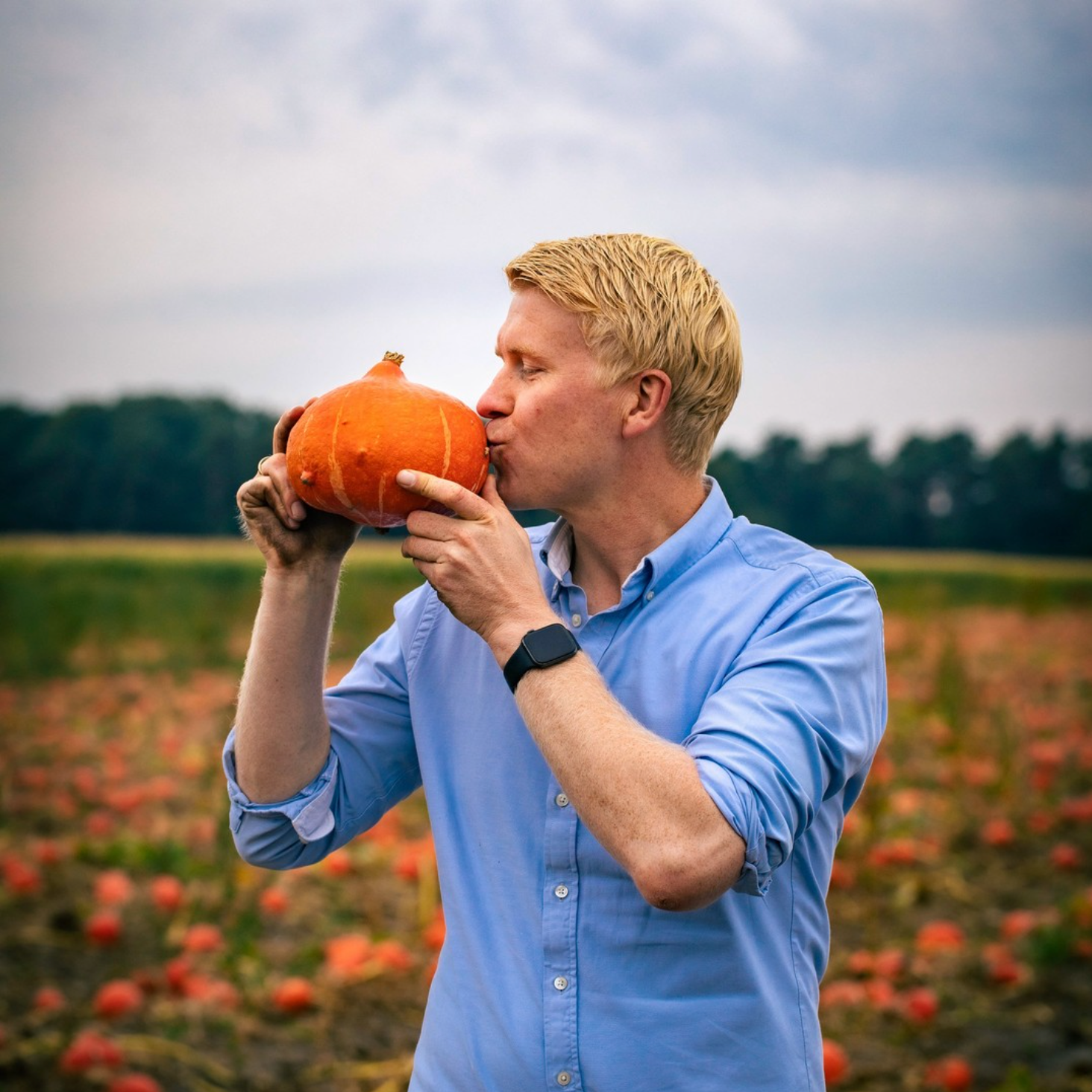
Rooted in the soil – pumpkins
“Pumpkins came into our range almost ‘by themselves’. Years ago, I was looking for good pumpkins for Halloween myself, couldn’t find any – and thought: right, then we’ll just grow them ourselves. No sooner said than done!”
The most important facts about pumpkins – for you
Pumpkin season: August to November
Pumpkin is healthy because:
Pumpkin brings plenty of vitamin A and vitamin B to your dishes, is good for your bladder and kidneys, protects your body cells from within and is easy to digest for almost everyone.
What’s inside (Hokkaido, 100 g):
Calories 67 kcal
Protein 1 g
Fat 0.4 g
Carbohydrates 5 g
Fibre 1 g
Our top tips for storing, buying and preparing:
- A ripe pumpkin sounds slightly hollow when you “knock” on it. The skin is hard, and the stem is still intact and woody.
- It’s best to keep your pumpkin in the vegetable drawer of your fridge. That way, it stays fresh for longest.
- Pumpkin for another season? No problem. You can simply freeze your pumpkin and enjoy it later (similar to courgettes).
- Don’t mix up edible and decorative pumpkins! If a pumpkin is meant as autumn decoration, it probably contains more bitter compounds and can be toxic.
Fun fact: Is a pumpkin really a berry?
Yes – a giant berry, so to speak. The technical term is a pepo, a berry with a hard rind. Botanically, the pumpkin is a fruit, although in the kitchen we don’t treat it as one. It also has vegetable-like properties and therefore falls into the category of “fruit vegetables”. Most people simply call pumpkin a “vegetable”. Whatever we call it: pumpkin always tastes great.

Freshness all the way. Every time you shop.
Quality matters to us. In every hand-picked berry, every spear of asparagus, every pumpkin, every cherry. WERNER’s word of honour.
Contact
Feel free to get in touch
Got a question about the range at your local farm shop? Would you like information about specific farm events? Or would your business like us to supply it? We look forward to hearing from you!